
1. Bearing Seal Types & Material Guide
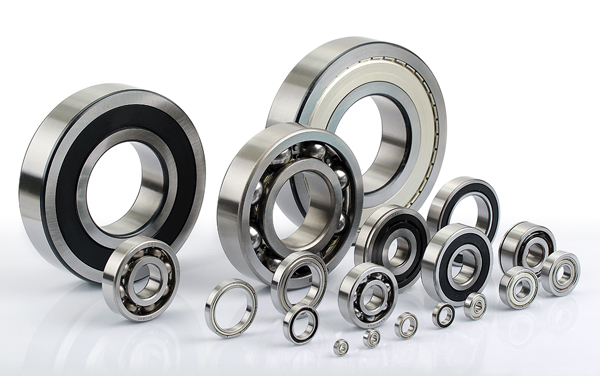
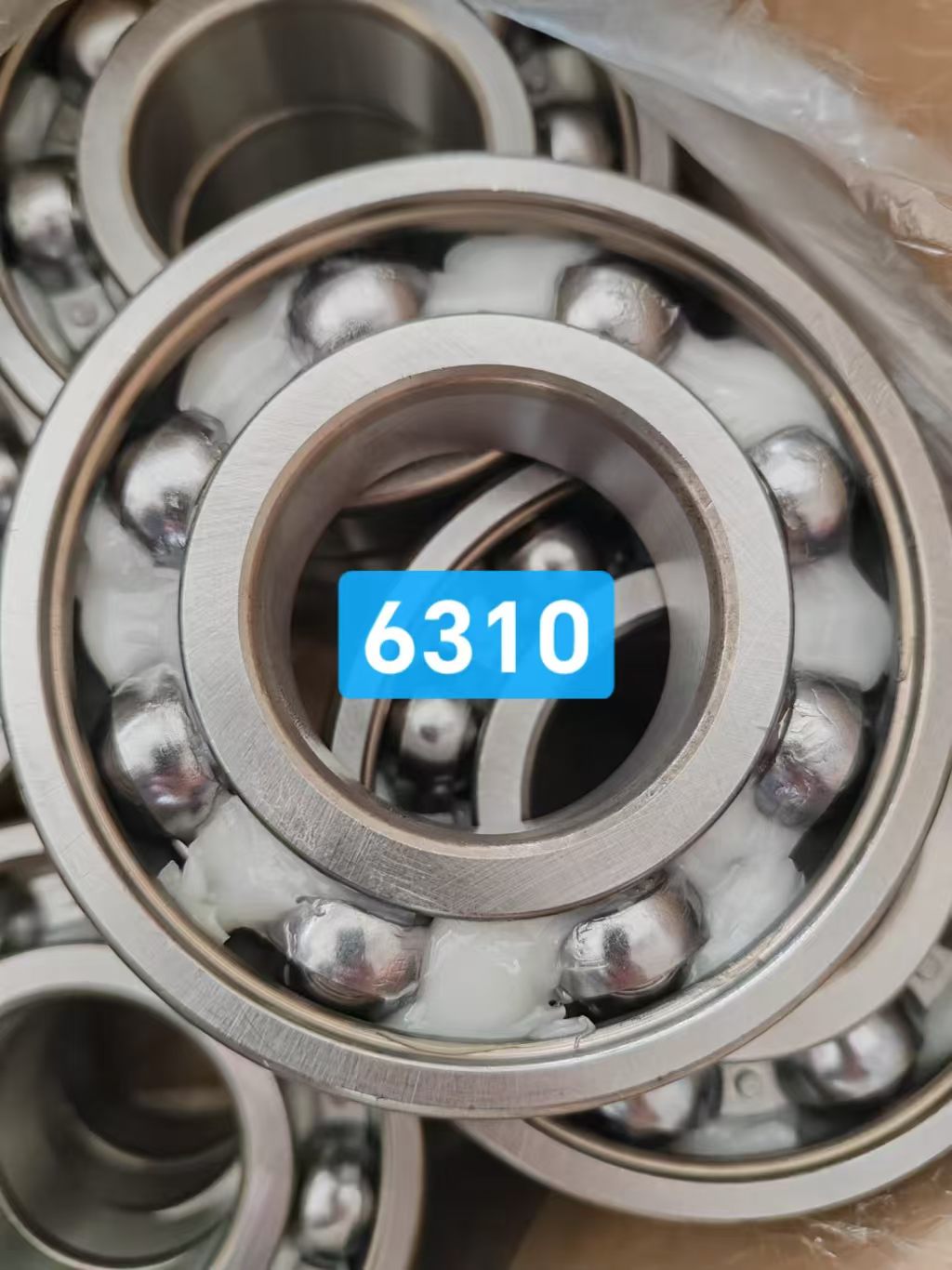
When selecting bearings, seal structure and material are two key factors that affect service life, running stability, maintenance cycle and applicable working conditions. This bearing seal types and material guide will walk you through every key detail.
Different environments such as speed, dust, humidity and corrosion require matching bearing seals and materials. This guide will break down the most common bearing seal types and materials to help you choose the right bearing for your equipment.
This bearing seal types and material guide will help you make the right choice.For more technical details on bearing seal types and material specifications, you can refer to the official documentation from leading manufacturer SKF .
2. Four Common Bearing Seal Types & How to Choose
In this bearing seal types and material guide, we first start with the most common bearing seal types. The main function of bearing seals is to prevent external dust, moisture and impurities from entering the bearing interior, and avoid internal grease leakage, so as to ensure stable bearing operation.
The main function of bearing seals is to prevent external dust, moisture and impurities from entering the bearing interior, and avoid internal grease leakage, so as to ensure stable bearing operation. In this bearing seal types and material guide, we break down four common seal types to help you choose wisely.
2.1 Open Type Bearing
Advantages: Simple structure, lowest cost, minimal running friction, excellent heat dissipation performance, suitable for high-speed operation and regular oiling maintenance.
Disadvantages: No protective structure. Dust and water vapor can easily enter the bearing. Lubricating grease is easy to lose, requiring frequent maintenance.
Applicable Scenarios: Clean and dry working environments, such as precision machine tool spindles, high-speed professional motors, and laboratory precision equipment.
2.2 Metal Shield Bearing (Iron Seal)
Advantages: Equipped with metal dust cover, which can block large particle dust. Good heat dissipation, high speed resistance, no aging and deformation at high temperature, cost-effective.
Disadvantages: Only dust-proof but not waterproof. It cannot block fine dust and water vapor. There is a gap between the metal shield and the inner ring, resulting in poor tightness.
Applicable Scenarios: Ordinary indoor mechanical equipment, common motors, dry working environments without water splash and corrosive substances.
2.3 Rubber Seal Bearing
Advantages: Adopts rubber contact sealing structure, with excellent dust-proof and waterproof effect. It can effectively lock internal grease, reduce grease loss and extend the maintenance-free cycle.
Disadvantages: Rubber accessories are prone to aging and hardening in long-term high-temperature environment, affecting sealing performance. The operating friction is larger than metal seal, and the maximum speed is limited.
Applicable Scenarios: Household appliances, water pumps, auto parts, small industrial equipment, suitable for slightly humid and dusty conventional working conditions.
2.4 Double-Sided Sealed Bearing
Advantages: Double-sided full sealing design, the highest protection level. It can effectively resist dust, water splash, moisture and impurity invasion, with almost no grease leakage. It is maintenance-free for a long time and highly adaptable to harsh environments.
Disadvantages: Large running friction, relatively weak heat dissipation performance and higher cost. Not suitable for ultra-high speed continuous operation.
Applicable Scenarios: Outdoor equipment, construction machinery, automobile hubs, food machinery, chemical equipment and other harsh working conditions with heavy dust, humidity and liquid splash.
3. Bearing Material Comparison & Pros and Cons
Bearing material directly determines the hardness, wear resistance, corrosion resistance, high temperature resistance and load capacity of the bearing. The following are the three most widely used bearing materials in the industry.
Bearing material directly determines the hardness, wear resistance, corrosion resistance, high temperature resistance and load capacity of the bearing. The right material choice is just as important as seal selection in this bearing seal types and material guide.
3.1 GCr15 Bearing Steel
Advantages: High overall hardness, excellent wear resistance and fatigue resistance, stable mechanical performance, mature processing technology and moderate cost. It is the most mainstream material for general industrial bearings.
Disadvantages: Poor rust and corrosion resistance. It is easy to rust and oxidize in humid and acidic-base environments, and needs regular lubrication and anti-rust maintenance. High temperature resistance is average.
Applicable Scenarios: General machinery, industrial motors, machine tools, automobile transmission parts, dry and non-corrosive conventional working environments.
3.2 Stainless Steel Bearing
Advantages: Excellent rust resistance and chemical corrosion resistance, not easy to oxidize and rust in humid, water-rich and weak corrosive environments, low maintenance cost and long service life.
3.3 Ceramic Bearing
Advantages: Ultra-high temperature resistance, strong corrosion resistance, insulation and non-magnetic, light weight, ultra-low friction coefficient, ultra-high speed resistance, and far longer service life than ordinary bearings.
Disadvantages: High brittleness, poor impact resistance, easy to crack under heavy load and impact force, and extremely high price.
Applicable Scenarios: High-speed precision motors, semiconductor equipment, aerospace equipment, high-end medical equipment and other special extreme working conditions.
4. Quick Selection Chart for Working Conditions
| Working Condition | Recommended Seal Type | Recommended Material |
|---|---|---|
| Clean & dry, high speed, maintainable | Open / Metal Shield | GCr15 |
| Indoor, slight dust | Metal Shield / Rubber Seal | GCr15 |
| Humid & dusty, waterproof required | Rubber Seal / Double-sided Seal | Stainless Steel |
| Food / Medical / Chemical, anti-corrosion | Double-sided Seal | Stainless Steel / Ceramic |
| Ultra-high speed, insulation, extreme temperature | Double-sided Seal | Ceramic |
5. Summary
With this bearing seal types and material guide, you can easily select the most suitable bearing for your application. There is no absolute “best” bearing, only the “most suitable” one. When selecting bearings, it is necessary to match the seal type and material according to the actual equipment speed, environment (dust, humidity, corrosion) and maintenance conditions.
We hope this bearing seal types and material guide answers your questions.As this bearing seal types and material guide shows, there is no absolute “best” bearing, only the “most suitable” one.